Production records for two picture books
These records trace the making of the books: story structure, research into published titles, comparisons of visual styles, and changes between versions.
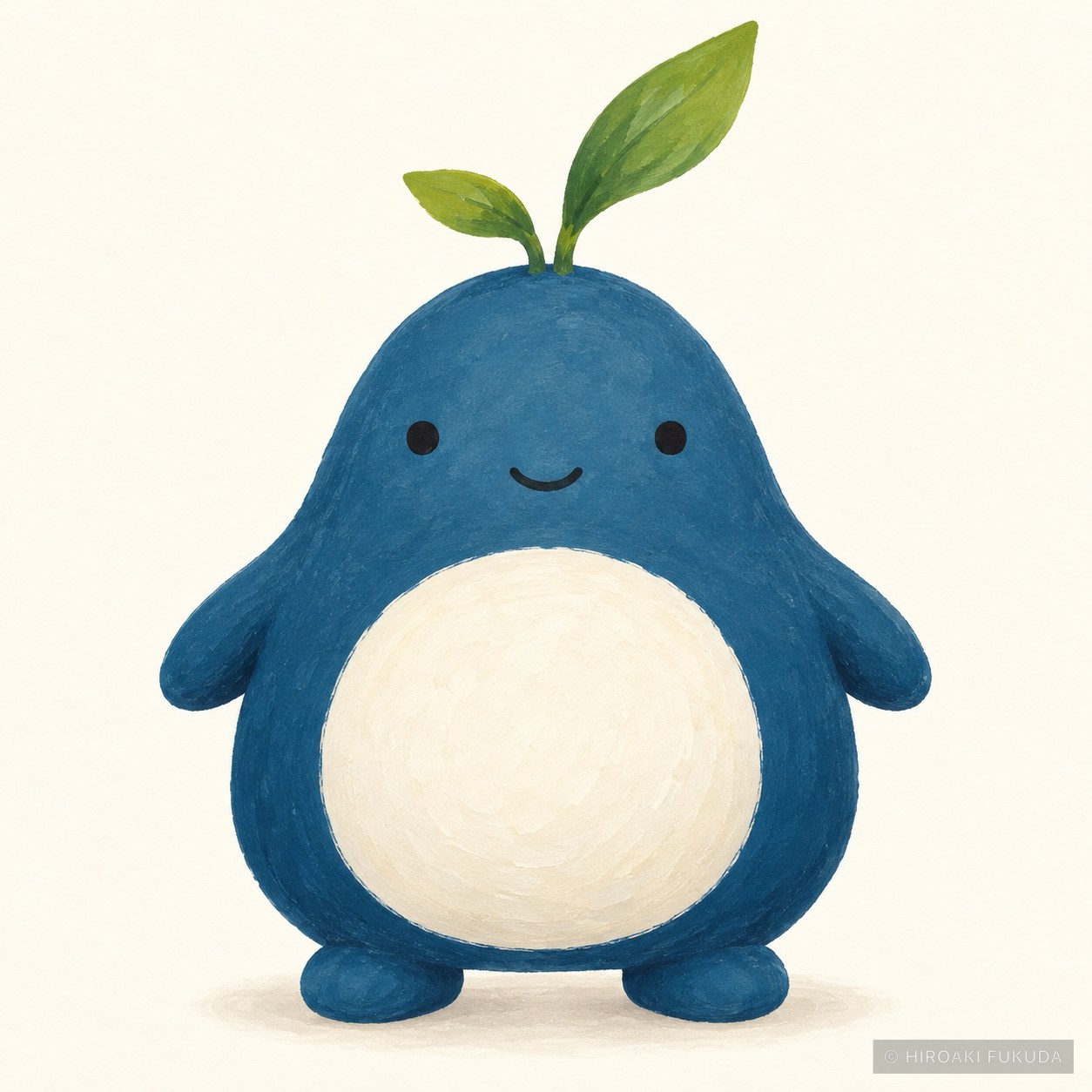
Ages 0–2 · Read-aloud · 16 story scenes / 18 screens in total
Rupo Kururi
Rupo turns from front to side to back, then faces forward again. The white belly appears differently in each scene. Repeated sounds such as “kururi” and “yura-yura,” along with brief invitations to the listener, lead to the closing line, “Once more—kururi.”
Read about the process (JP) ↗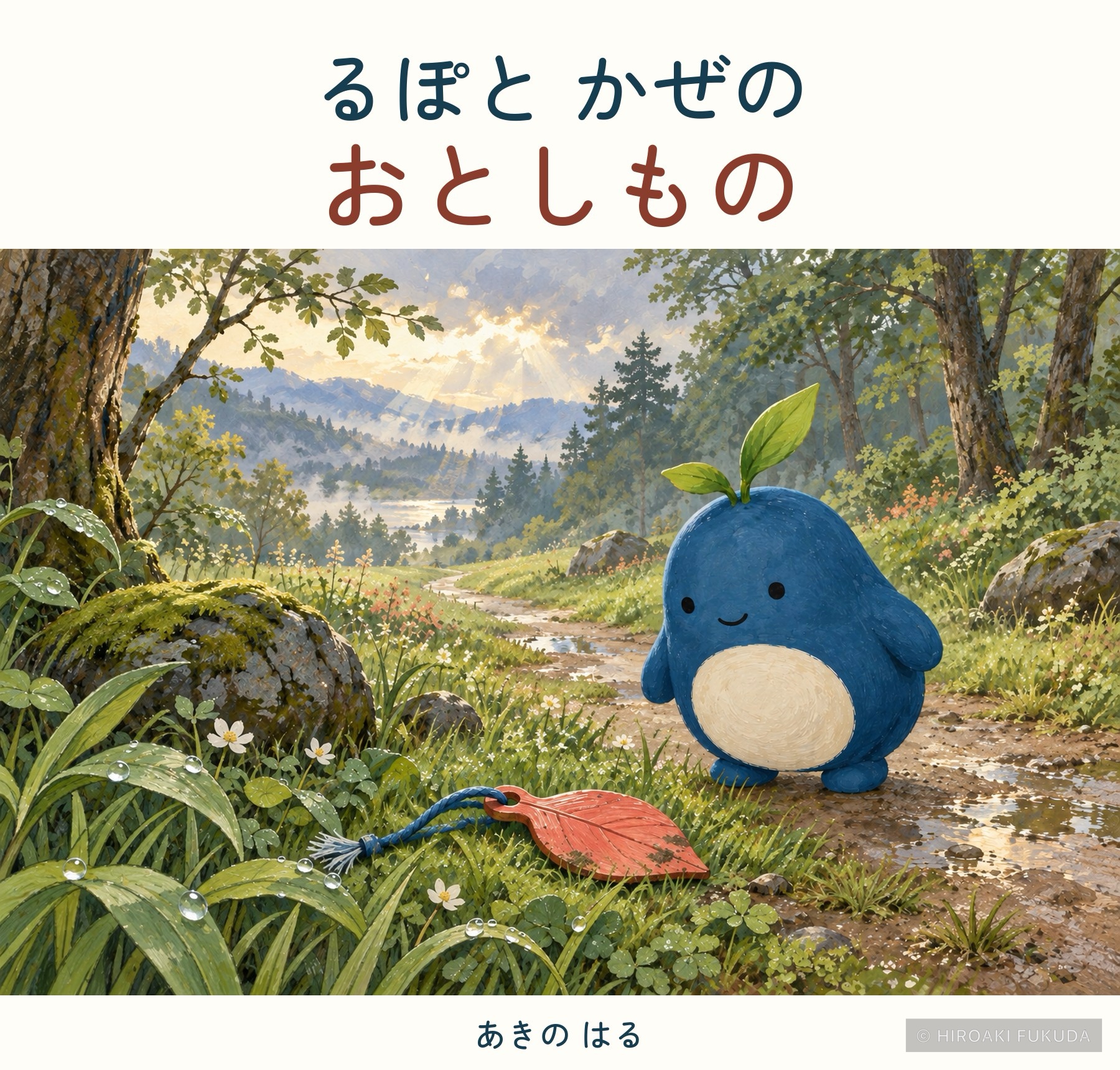
Ages 6–8 · Independent reading and read-aloud · 12 story scenes / 14 screens in total
Rupo to Kaze no Otoshimono
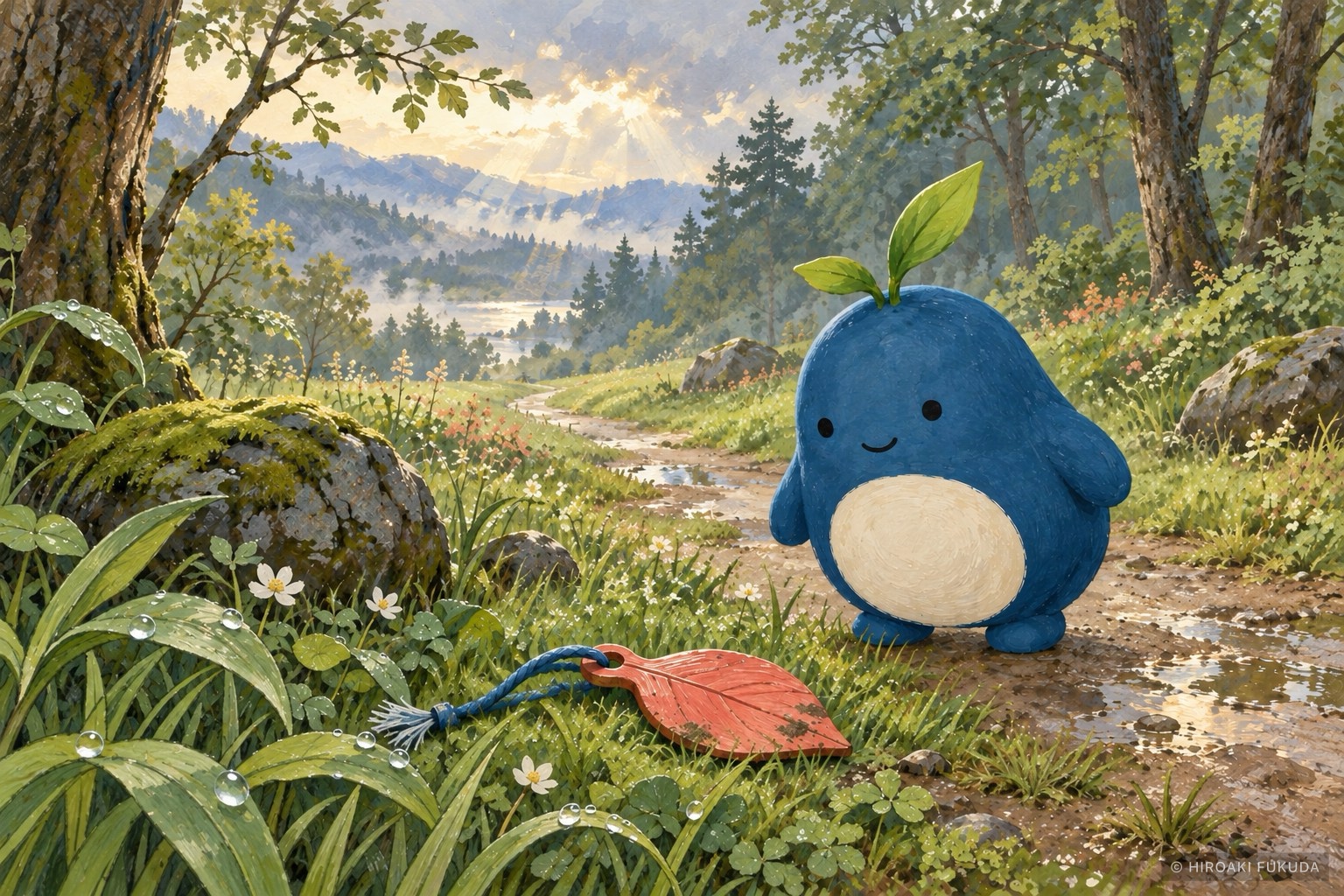
In a forest after the rain, Rupo picks up a lost wooden object shaped like a red leaf. A blue cord and tooth marks offer clues to its owner. Rupo tries blowing into it like a whistle, but no sound comes out; then the wind carries it away. The story turns when Rupo stops running and begins to listen.
Read about the process (JP) ↗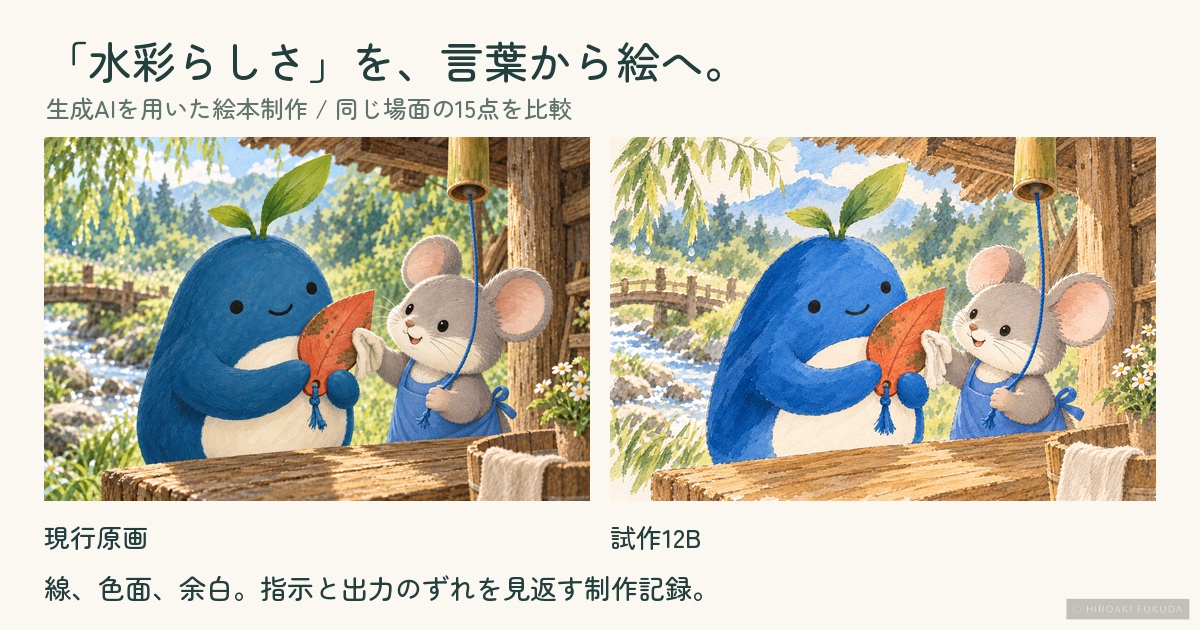
Research into published picture books
For this project, I compiled bibliographic information for 500 picture books with ISBNs and separately examined 500 cover images. The records cover readership, themes, and the appearance and placement of cover lettering; they do not measure market share or effectiveness.
Comparing visual styles
The initial images had photographic foreground blur and uniformly fine paint marks. I wanted a different handling of pencil and watercolor: where to draw a line, lay down a broad area of color, leave the paper white, or let an edge shift. The aim was not simply to add more detail. I continued to preserve the sparkle of the water droplets.
Read about the process (JP) ↗